In recent years, the allure of beekeeping has captivated individuals from all walks of life. Whether it's the promise of honey-laden rewards or the desire to contribute to the preservation of our environment, beekeeping offers a fulfilling journey rich in learning and discovery. However, for newcomers, the prospect of starting a beekeeping venture can seem daunting. Fear not! This comprehensive guide will walk you through the essential steps to embark on your beekeeping journey confidently.
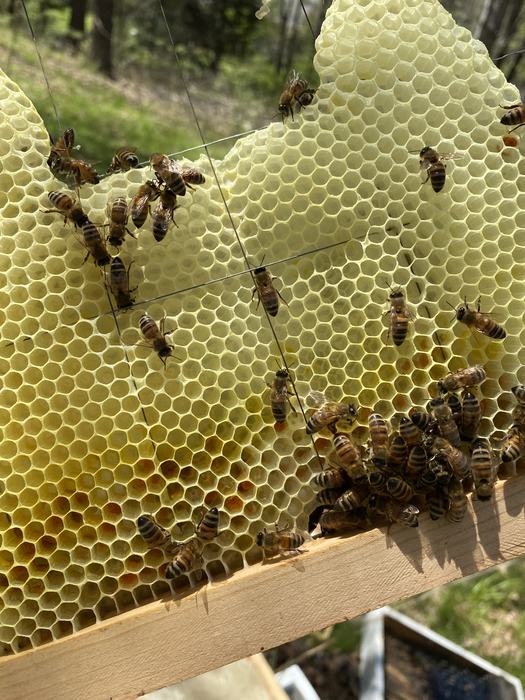
Colony of honeybees, Apis mellifera, drawing out honeycomb in a new hive. -Taylor E. Jones
Why Beekeeping?
Before delving into the practical aspects, let's explore why beekeeping is a pursuit worth considering. Beyond the sweet reward of harvesting honey, beekeeping plays a vital role in ecosystem health. Bees are prolific pollinators, facilitating the reproduction of countless plant species, including many that are crucial for agriculture. By becoming a beekeeper, you contribute to the preservation of biodiversity and food security while enjoying a closer connection to nature.
Educate Yourself
Like any endeavor, beekeeping requires knowledge and understanding. Start by immersing yourself in resources that cover bee biology, hive management, and beekeeping techniques. Books, online courses, and local beekeeping associations are invaluable sources of information. Consider attending workshops or finding a mentor who can provide hands-on guidance and support.
Legal Considerations
Before setting up your first hive, familiarize yourself with local regulations and ordinances governing beekeeping. Depending on your location, there may be zoning restrictions, hive placement requirements, or registration obligations. Ensure compliance with these regulations to avoid potential legal issues down the road.
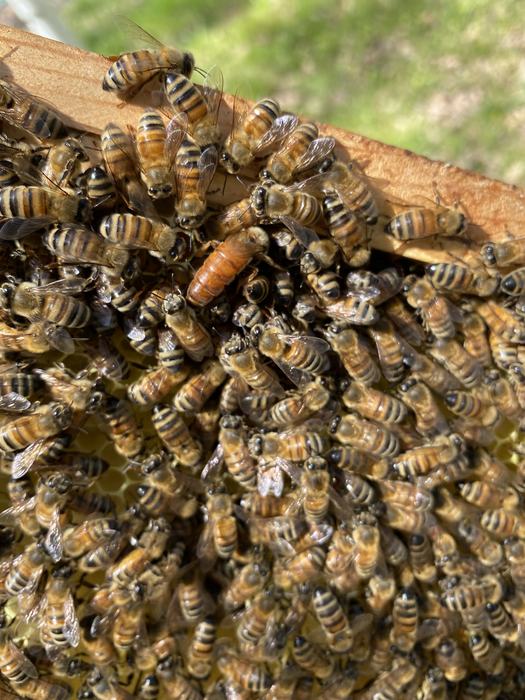
Honeybees on a hive frame. Queen is centered, with the extended abdomen that is golden brown. - Taylor E. Jones
Selecting Hive Equipment
One of the first steps in beekeeping is acquiring the necessary equipment. A standard beehive consists of several components, including:
Bottom Board: The base of the hive, providing ventilation and a landing platform for bees.
Hive Bodies (Supers): Stackable boxes where bees build comb, store honey, and raise brood.
Frames: Removable structures within the hive where bees construct comb and rear brood.
Inner and Outer Covers: Protect the hive from the elements and provide insulation.
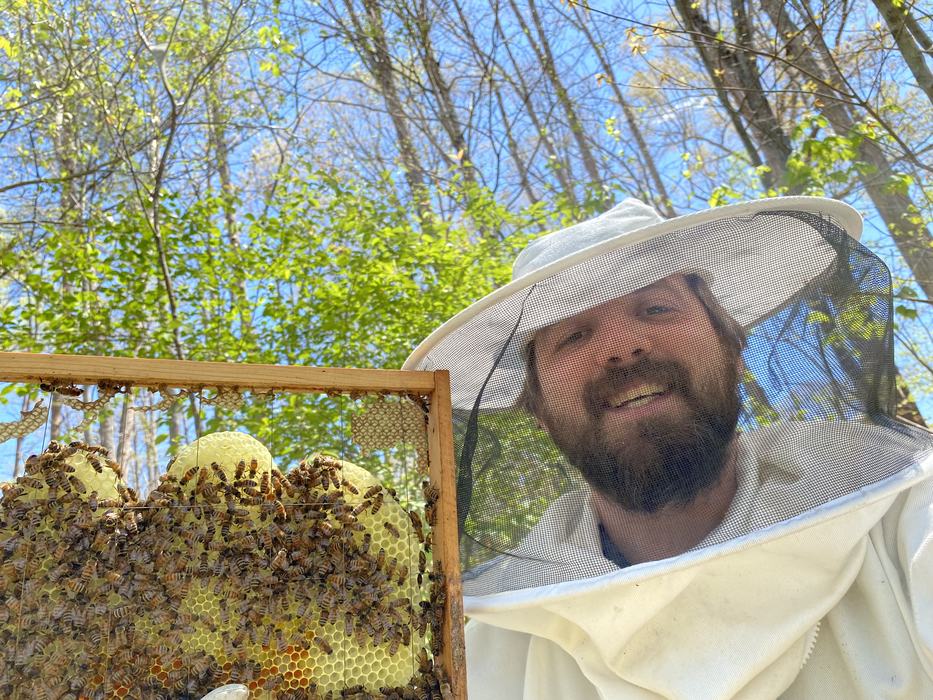
Protective Gear: Essential for your safety, including a beekeeping suit, veil, gloves, and smoker.
Tools: Hive tools for prying apart hive components, inspecting frames, and scraping propolis.
Invest in quality equipment from reputable suppliers to ensure the longevity and functionality of your hive.
Choosing a Hive Location
Selecting the right location for your hive is crucial for its success. Consider the following factors:
Sunlight: Choose a site that receives ample sunlight, as bees thrive in warm environments. It is preferred that hive entrances are south facing.
Shelter: Provide some protection from strong winds and extreme weather conditions.
Accessibility: Ensure easy access for hive inspections and maintenance, while also considering the safety and privacy of neighboring properties.
Water Source: Bees require water for hydration and cooling the hive, so locate your hive near a freshwater source if possible.
Acquiring BeesWith your hive equipment assembled and your hive location selected, it's time to acquire bees. There are several options for obtaining bees:
Package Bees: Purchase a package of bees, typically consisting of a queen bee and thousands of worker bees, enclosed in a ventilated box.
Nucleus Colony (Nuc): A small, established colony containing frames of brood, bees, and a queen.
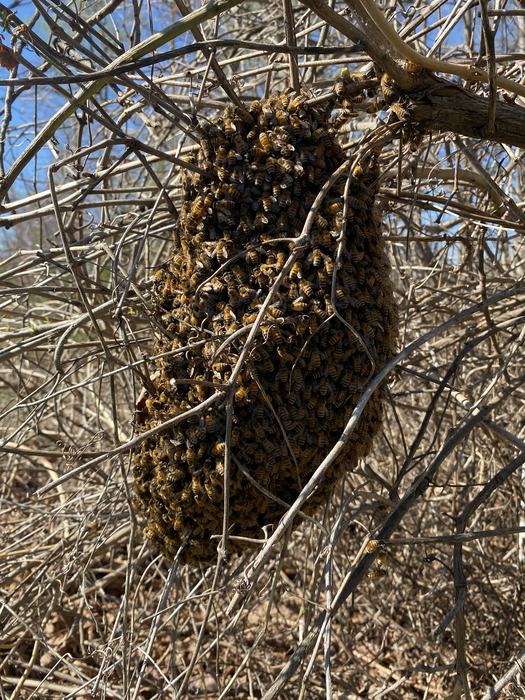
Swarm Capture: Capture a swarm of bees that has naturally clustered together, often found hanging from tree branches or other structures.
Choose the method that best suits your preferences and budget, ensuring that the bees you acquire are healthy and disease-free.
Common site in the Spring in North Carolina. A honeybee swarm in the "beard" pattern hanging from a branch. -Taylor E. Jones
Installing Your Hive
Once you have your bees and equipment ready, it's time to install your hive:
Prepare the Hive: Assemble the hive components according to the manufacturer's instructions and place them at the chosen location.
Introduce the Bees: If you're installing a package of bees or a nucleus colony, follow the supplier's instructions for releasing them into the hive. Take care to avoid injuring the queen during installation.
Provide Food: Ensure that your bees have access to a nearby nectar and pollen source, such as flowering plants or a sugar syrup feeder, to support their initial establishment in the hive.
Monitor and Maintain: Regularly inspect your hive to assess colony health, monitor honey production, and address any issues or challenges that may arise. Keep detailed records of your observations and interventions to track the progress of your hive over time.
Conclusion
Embarking on a beekeeping journey is a fulfilling and rewarding experience that offers numerous benefits for both individuals and the environment. By educating yourself, acquiring the necessary equipment, and following best practices for hive management, you can establish and maintain healthy bee colonies while enjoying the sweet rewards of honey production. Remember to approach beekeeping with patience, curiosity, and a willingness to learn, and you'll find yourself immersed in a fascinating world teeming with life and wonder. Happy beekeeping!